Modernism and music
Palau de la Musica Catalana
The Palau de la Música Catalana is a modernist concert hall in the historic centre of Barcelona. The building was designed by Lluís Domènech i Montaner for the Orfeó Català and combines architecture with mosaic, stained glass, sculpture and decorative metalwork. You can approach the Palau as an architectural visit, as a concert location or as a short stop during a walk through the surrounding neighbourhoods.
Palau de la Musica Catalana at a glance
Choose between a concert and an architectural visit. At a concert, the music and your seat take priority; a visitor route is designed for looking at the building. Book for the experience you want, rather than simply for a photograph of the hall. The Palau was built at the beginning of the twentieth century as the home of the Orfeó Català. The relatively narrow streets surrounding the building make the exterior experience different from free-standing monuments. Inside, the concert hall is the best-known part, but access depends on the type of visit, programming and current availability.
Architecture. The building is an important example of Catalan modernism.
Applied arts. Mosaic, glass, sculpture and metalwork form one coherent design.
Music. The Palau is a functioning concert venue and home to a musical tradition.
Location. The compact urban environment determines how facade and access are experienced.
What can you see and do in Palau de la Musica Catalana?
Choose in advance whether you want to view the building from the inside during a visit, attend a concert or just include the exterior in a city walk. Current visit products, prices and programs belong to the official provider.
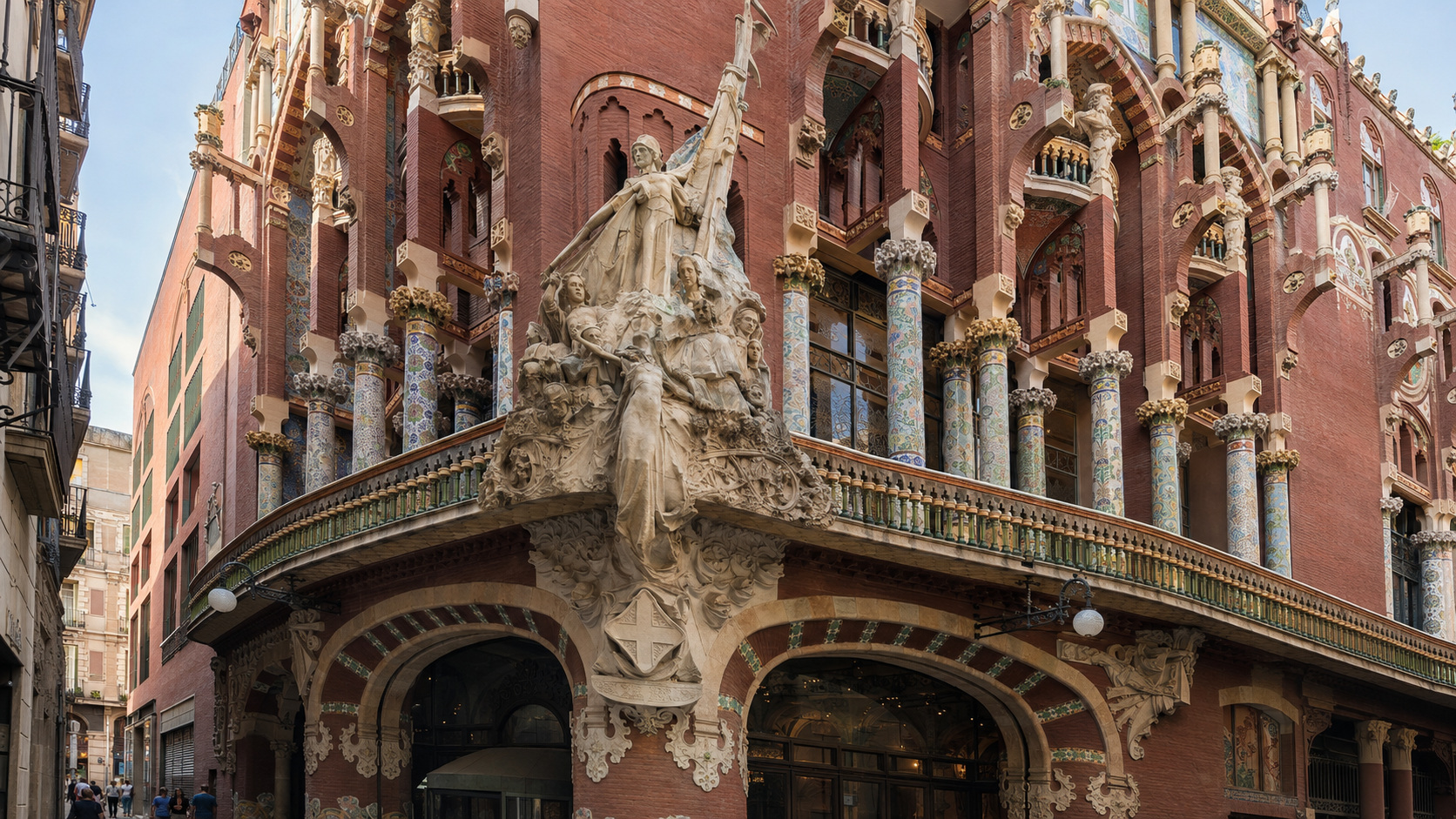
Main facade. The facade combines brick, mosaic, columns and sculptural details within a narrow urban space. The limited viewing distance is part of the experience.
Concert hall. The concert hall is the central interior and stands out because of the combination of daylight, colour and decorative arts. Access depends on a visit or performance.
Stained glass ceiling. The large stained glass element above the hall is a recognizable part of the interior design.
Stage and sculpture. Around the stage, music, architecture and sculpture come together as parts of one design.
Lluís Millet room and circulation areas. Stairs, circulation spaces and the Lluís Millet room continue material, light and ornament through the building, as far as accessible.
Concert or architectural visit. A performance and an architectural visit are different experiences. Determine in advance which form suits your interests and check the current options.
Viewing route
What will you look out for in the Palau de la Música Catalana?
This viewing order helps to recognize the connection between building, material and music function. The actual route may differ depending on the type of visit and current access.
Urban location→Main facade→Stairs and equipment→Concert hall→Ceiling and podium
- Step 1
View the location in the street
Note how the building is incorporated into a dense urban block and approached from a limited distance.
- Step 2
Examine the facade details
Look at the combination of brick, mosaic, columns and sculpture without blocking passageways.
- Step 3
Pay attention to stairs, light and materials
See how decorative elements and daylight guide the transition to key areas, where accessible.
- Step 4
Experience the concert hall as a whole
Before studying individual details, consider the relationship between seating, balconies, stage and lighting.
- Step 5
Focus your gaze on the ceiling and stage
Compare stained glass, sculpture and other applied arts as parts of one design.
Architecture and music in the Palau
The Palau is both a monument and an active concert hall. The architecture is designed around choral music and public use, while applied arts help shape almost every space. The building is therefore more than a decorative interior or just an event location.
For architecture
Choose a visit form that offers access to the interior and check the current route.
For music
View the official programming without treating temporary concerts as permanent information.
For a brief introduction
Study the exterior and combine this with a targeted walk in the area.
Who is Palau de la Música Catalana interesting for?
Lovers of modernism. The design offers a different example of Catalan modernism than Gaudí's residential houses.
Music lovers. The function as a concert hall and the history of the Orfeó Català provide substantive starting points.
Visitors to the historic centre. The building can be combined with El Born or Barri Gòtic.
The appropriate form of visit and current accessibility differ per visit.
Accessibility and visit to the Palau
Check the visit form. Check in advance which form is available.
Take the street environment into account. The surrounding streets are narrow and intensively used.
Follow current concert instructions. Come for a performance based on the information provided by the Palau.
Check entrance and accessibility. Please consult the official provider for this.
Before you visit
Choose between an architectural visit and a concert. Both offer different access and substantive focus.
Check current availability. Visit formats and programming may change.
First look at the building as a whole. Place a facade or room in the entire spatial composition.
Then pay attention to material and details. Compare mosaic, glass, sculpture and metalwork.
Use official sources. Check changeable visitor information at the Palau.
Combine with one adjacent area. Choose El Born, Barri Gòtic or an eastern continuation.
Continue nearby
Choose combinations based on your time and interest; multiple extensive visits do not naturally fit into one short half-day.
El Born. Walk towards the historic streets and choose one or two additional locations.
Barri Gotic. Combine the Palau with a targeted walk on the other side of Via Laietana without treating both areas as one neighbourhood.
Arc de Triomf and Parc de la Ciutadella. Choose an eastern continuation when time and energy permit; these are adjacent destinations.
Frequently asked questions
What is Palau de la Música Catalana?
It is a modernist concert hall, designed by Lluís Domènech i Montaner for the Orfeó Català.
Can you visit the Palau from the inside?
This can be done through a suitable form of visit or performance when available. Officially check the current options.
Who designed Palau de la Música Catalana?
The architect was Lluís Domènech i Montaner.
Can you attend a concert at the Palau?
The Palau is an active concert hall. View performances and availability in the current official programming.
What can you combine the Palau with?
El Born and Barri Gòtic are nearby; Arc de Triomf and Parc de la Ciutadella can also form an eastern continuation.