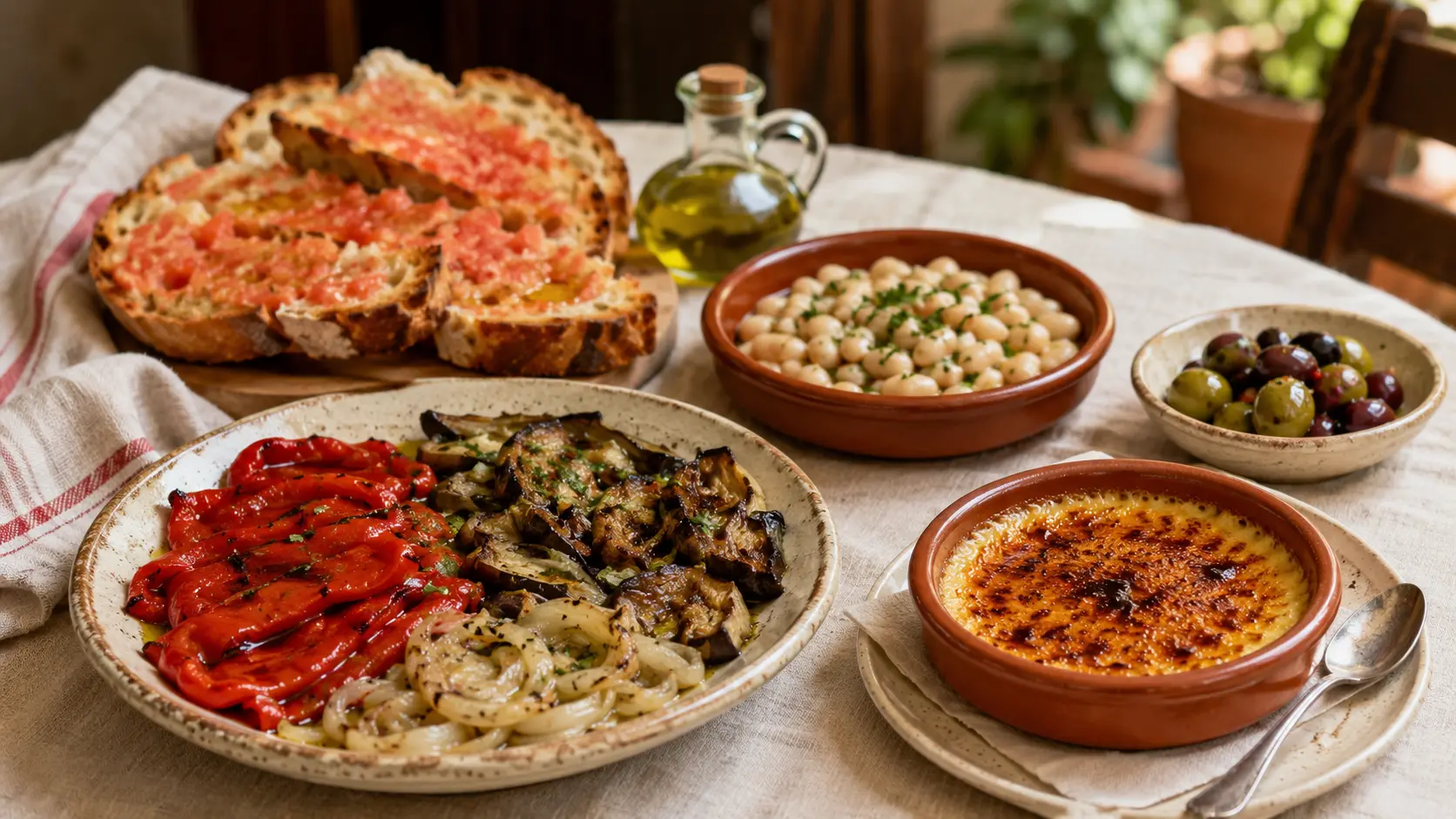
Local dishes in Barcelona: Recognizing Catalan flavors
Barcelona's cuisine is shaped by Catalan traditions, Mediterranean products and influences from far outside the city. From tomato bread to roasted vegetables and crema catalana, this guide will help you recognize dishes and menu terms without automatically calling everything served in Barcelona local.
SubjectCatalan dishes, ingredients and menu terms
Handy forVisitors looking for local context on a menu
Please noteOrigin, season and version vary per dish and case
Selection aidAsk about ingredients and attribute regional origin carefully
Can be combined well withTapas, Paella and La Boqueria
Choose dishes that make a meal together
You do not need to try every local dish in one meal. Choose a bread or vegetable dish, then a main course and perhaps something sweet. Compare preparations and ask about unfamiliar names; this makes ordering more useful than following a long checklist.
Pa amb tomàquet. Bread with tomato, olive oil and salt works alongside small dishes. Check whether bread already comes with your order before adding more.
Escalivada. Roasted vegetables, such as peppers and aubergines, add contrast alongside meat or rice. Ask about additions if you are vegetarian.
Esqueixada. This preparation contains salted cod and vegetables. Choose it for a cold fish dish; it is not a vegetarian salad.
Botifarra amb mongetes. Sausage with white beans makes a substantial main course. A vegetable dish is a better contrast than another rich meat dish.
Suquet de peix. A fish stew suits a warm meal with broth or sauce. Ask which fish and shellfish the kitchen uses.
Crema catalana. A soft custard-like base sits beneath the caramelised top. Leave room for it if you want dessert after your meal.
Four addresses for a focused introduction to Catalan dishes
No single restaurant represents all Catalan cooking. These four differ in age, style and price level. Check the current menu to see which dish is actually being served.
Gothic Quarter
Can Culleretes
Carrer d'en Quintana, 5 08002Barcelona
Best for: A classic Catalan restaurant meal
The historic dining room and traditional menu suit visitors who want to compare several classics in one meal. Book for an unhurried meal and check whether the substantial cooking fits your plans.
Its menu includes classics such as escabetx, stuffed squid and paella Parellada, subject to the current offering. The location combines easily with an afternoon in El Raval.
Best for: A contemporary interpretation of Catalan flavours
Ada Parellada combines Catalan ingredients and dishes with a contemporary approach. Choose it when you do not need tradition to come only in a historic room or fixed classic form.
Best for: Rice dishes and classics in a large historic restaurant
The focus is a full lunch or dinner, including rice dishes. This is a large, well-known restaurant; book ahead and let the menu, not only the name, decide whether it suits you.
Addresses and official information checked on 25 September 2026. These are independent editorial selections; no business paid for inclusion.
Catalan and Spanish are not interchangeable
Barcelona serves both Catalan dishes and food from other parts of Spain. Look at the dish and preparation instead of treating everything as specifically local. A restaurant may combine several traditions; its menu helps you decide what you want to try.
Practically choosing local dishes
Read the description. Ask what a dish contains if you do not recognise its name. Stock, sauces and garnishes can make the difference.
Allergies. Discuss ingredients and cross-contact directly with the venue before ordering.
Changing menus. Choose an alternative from the menu if a dish is unavailable that day.
Building a meal. Combine lighter and more substantial dishes; you do not need to order every speciality at once.